Diagram Index
Overview Diagrams
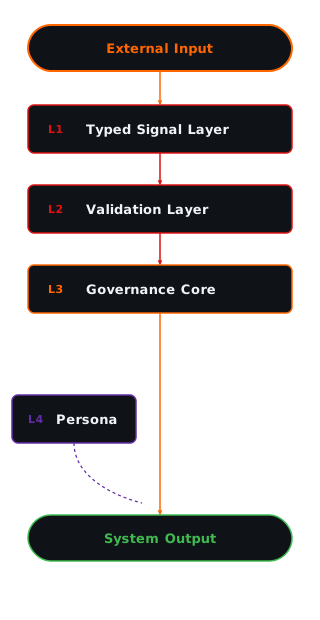
ORP Layered Architecture
The four-layer signal processing model from raw observation through governed output.
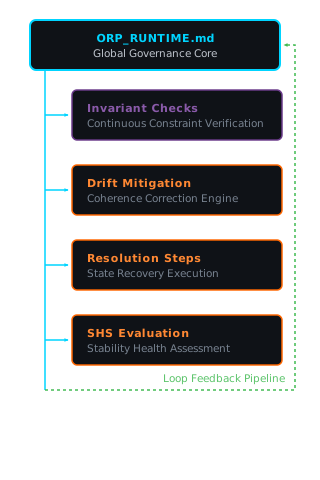
Governance Feedback Loop
Continuous signal-to-output cycle with recalibration feeding back into signal intake.
Pipeline Diagrams
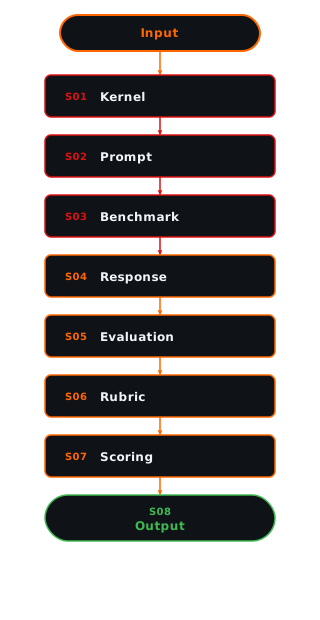
Eight-Stage Execution Matrix
The complete ORP pipeline from raw external input through provenance-sealed output state.
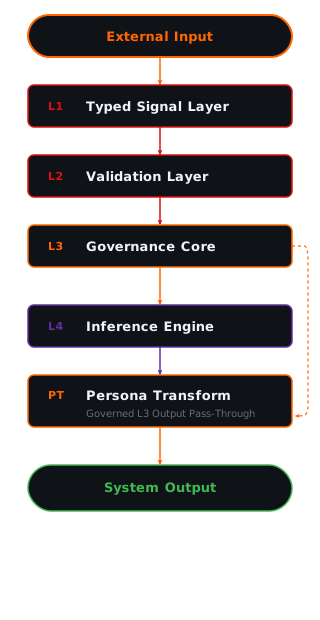
Persona Transform Layer
Governed L3 output passes through the persona transform before final rendering.
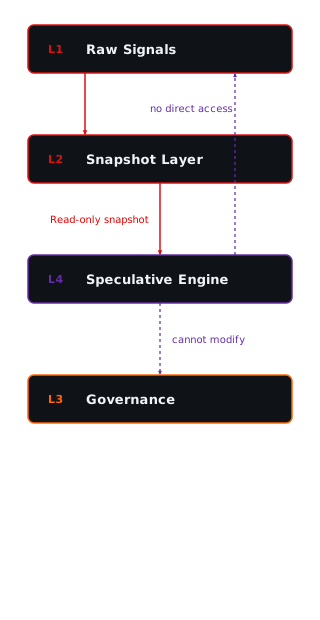
Layer Authority & Isolation
L4 receives only a read-only snapshot; it cannot modify L3 or directly access L1 signals.
Runtime Variants
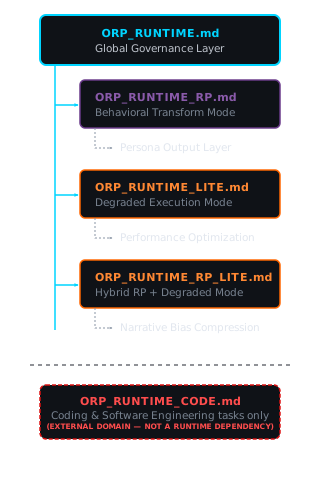
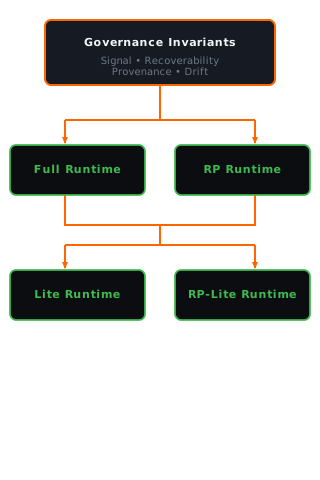
Runtime Variant Tree
All four runtime profiles branch from the shared ORP Core — each inherits governance invariants.
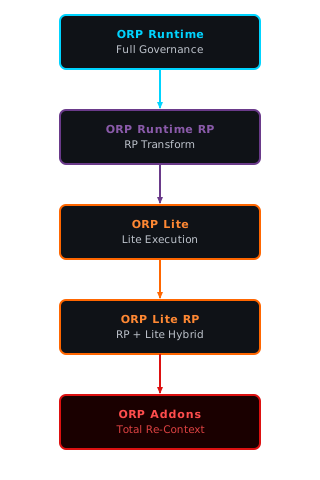
Compute Overhead Spectrum
Variants ordered by decreasing resource overhead — left is heaviest, right is lightest.
Governance Invariant Preservation
No variant drops provenance tracking or SHS state management — invariants propagate to all profiles.
Drift & Governance
σ² Drift Detection Pipeline
Historical signal vectors feed variance computation, producing the σ² metric that drives SHS transitions.
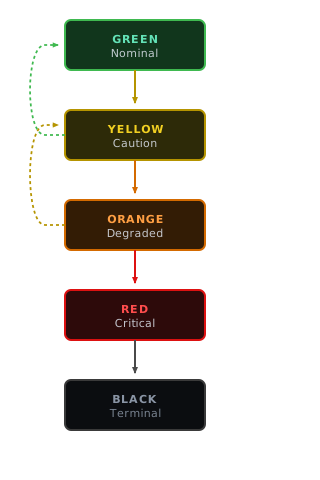
SHS State Machine
Stability Health State transitions — from nominal GREEN through terminal BLACK failure state.
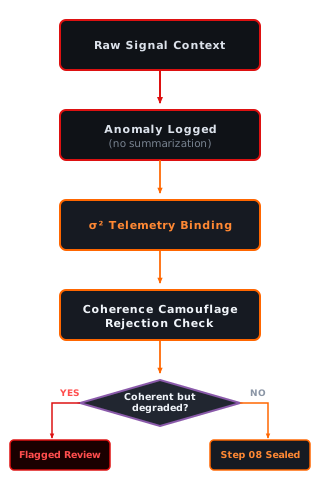
Provenance Chain Integrity
Context flows through layers without summarization; the chain is sealed at Step 08 and cannot be retroactively modified.
Core Principles
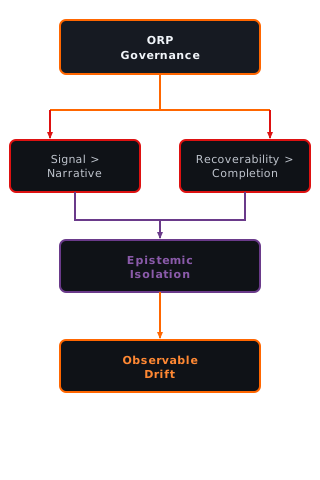
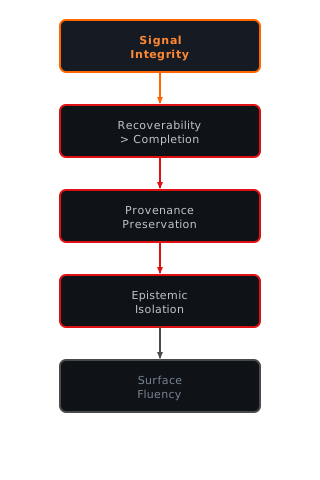
Priority Hierarchy
Signal integrity and recoverability always supersede presentation fluency — governance is non-negotiable at every level.
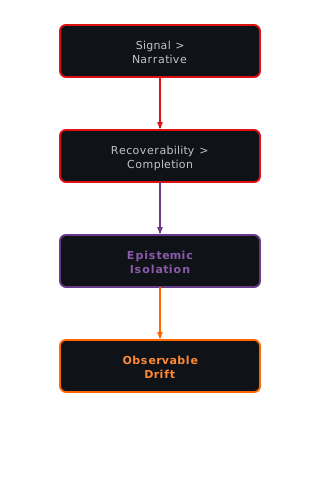
The Four Invariants
Non-negotiable constraints that all runtime variants, evaluation schemas, and recovery protocols must preserve.
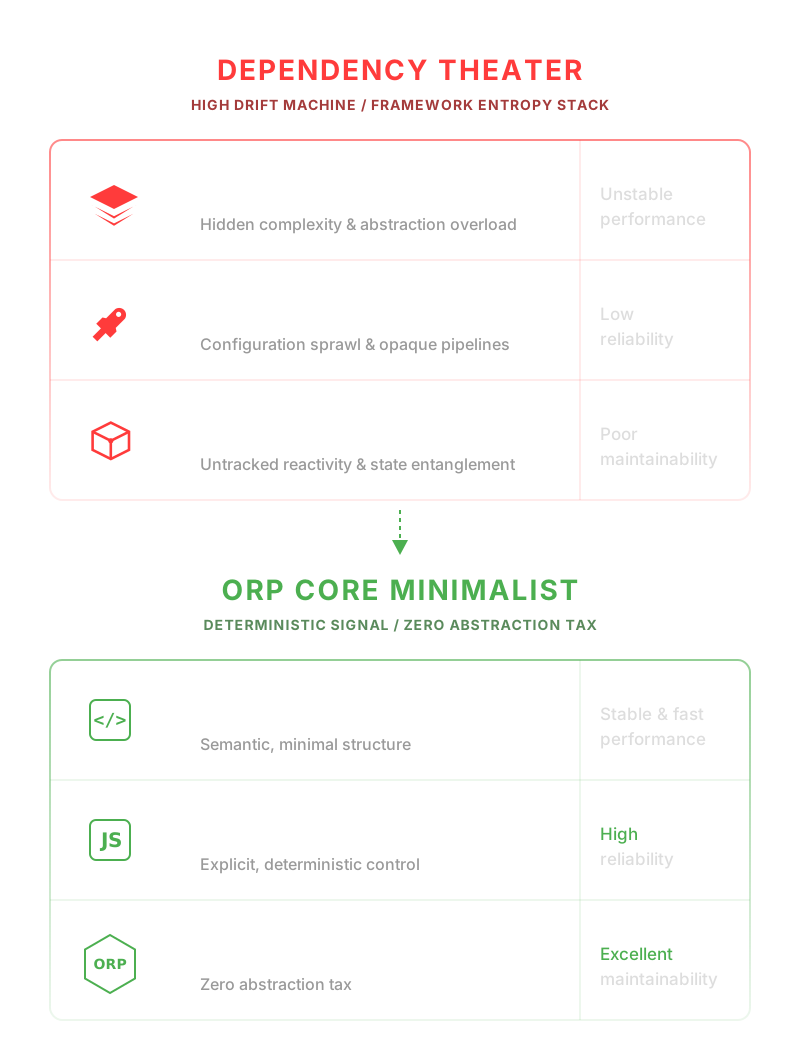
Dependency Theater vs ORP Minimalism
Modern web development dependency bloat versus ORP's zero-dependency deterministic governance approach.